


Regulations mandating fuel economy for auto manufacturers have generally ignored motorcyclists.
Motorcycles have always achieved remarkable fuel economy in comparison with automobiles, with 40, 50 and even 60 mpg relatively commonplace for two-wheelers. Honda’s NC700X frequently averages 70 mpg according to Fuelly.
By comparison, the “remarkable” new 2023 Toyota Prius hybrid is rated in the low 50 mpg range with Car and Driver testing revealing an actual 45 mpg. Pretty good for a car, I suppose, but not hard for an ICE motorcycle to beat.
Nevertheless, it is expected that Euro emissions and fuel economy standards are coming for motorcycles hard over the next several years. Reduced C02 emissions and strict MPG standards are prompting motorcycle manufacturers to look at pure electric solutions, hybrid gas/electric solutions, alternative fuel solutions (so-called eFUELS) and even hydrogen. For enthusiasts, we can expect the adoption of hybrids in the relatively near future that provide both the performance and range we demand.
Pure electric motorcycles simply don’t work for enthusiasts. Certainly, acceleration and top speed are not a problem for pure electric motorcycles. My recent drag race with a Tesla sedan driven by a soccer mom drove home the point that electric powertrains can certainly offer high performance. Take a look at this YouTube video if you are not convinced.
So electric vehicles, including motorcycles, can haul ass and offer plenty of adrenaline to even the most enthusiastic motorcyclists. The problem is range and weight. To give you an idea of the “state-of-the-art” in production electric motorcycles, take a look at the spec sheet for Zero’s DSR/X. This new model boasts a “city range” of 180 miles, but acknowledges an average range of only 85 miles at a steady 70 mph on the highway. Zero lists curb weight for this model at 544 pounds thanks to extensive weight-saving measures. Again, with current technology, this is about as light as you can expect for a pure electric model with this sort of performance and range. 544 pounds is in the ball park of large-displacement ICE adventure tourers.
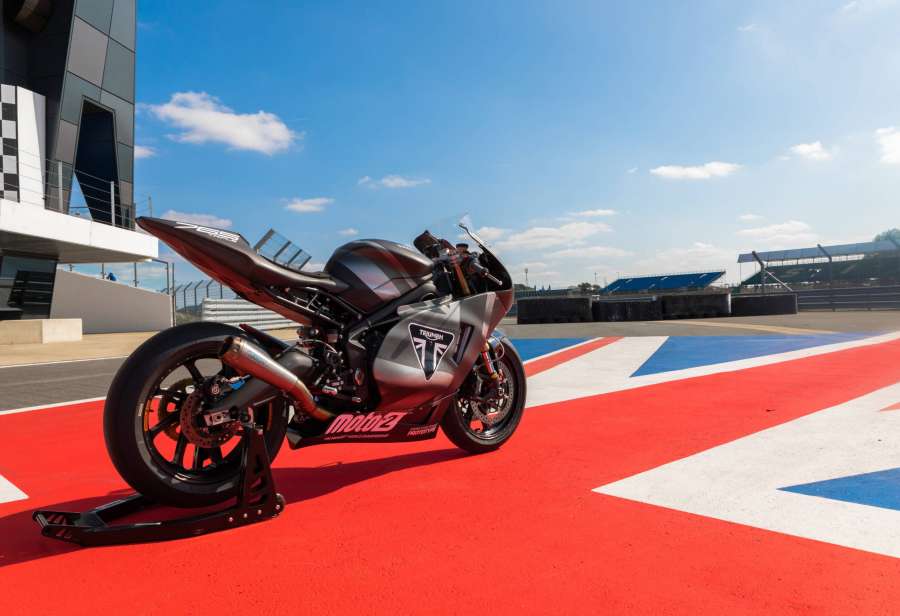
With the latest and greatest technology, the MotoGP Championship runs a MotoE pure electric series, where the bikes can’t do more than 6-8 laps, with lap times slower than the smallest ICE-powered bikes in Moto3. Take a look at this discussion with Ducati and Triumph representatives regarding the problems with weight and range for high performance electric motorcycles.
So if you want good performance and decent range, don’t expect it from pure electric bikes anytime soon. The major manufacturers realized this. Ducati does not want to damage its reputation with production models that disappoint consumers, and has directly said so. Kawasaki has production electric models coming soon with relatively low power and low range designated as “city bikes”.
But gas/electric hybrids promise performance, practicality and good range in motorcycles. At the 2022 EICMA Motorcycle Show a few months ago, Vitesco Technologies promoted a turn-key hybrid solution for motorcycle manufacturers incorporating an electric motor and removable battery that could be added to, and augment, mid-displacement motorcycles primarily driven by ICE. According to Vitesco, this hybrid package adds less than 50 pounds to a ICE bike, and it actually had a working prototype based on a Husqvarna Svartpilen 401. Reportedly, this concept bike weighed less than 380 pounds.
So hybrid motorcycles promise to be both lighter and much less expensive than pure electrics. Featuring a gas engine, they can quickly be topped-off at a gas station like any other motorcycle. But the hybrid drive train can boost both fuel efficiency and performance.
Workable hybrids have the potential to essentially double the torque output of a stand-alone ICE bike. At the same time, their electric motors can take over motive force where the ICE is least efficient, such as stop-and-go traffic around town. Relatively simple clutch and transmission features can seamlessly couple and de-couple the ICE and electric motors to maximize efficiency, as well as performance.
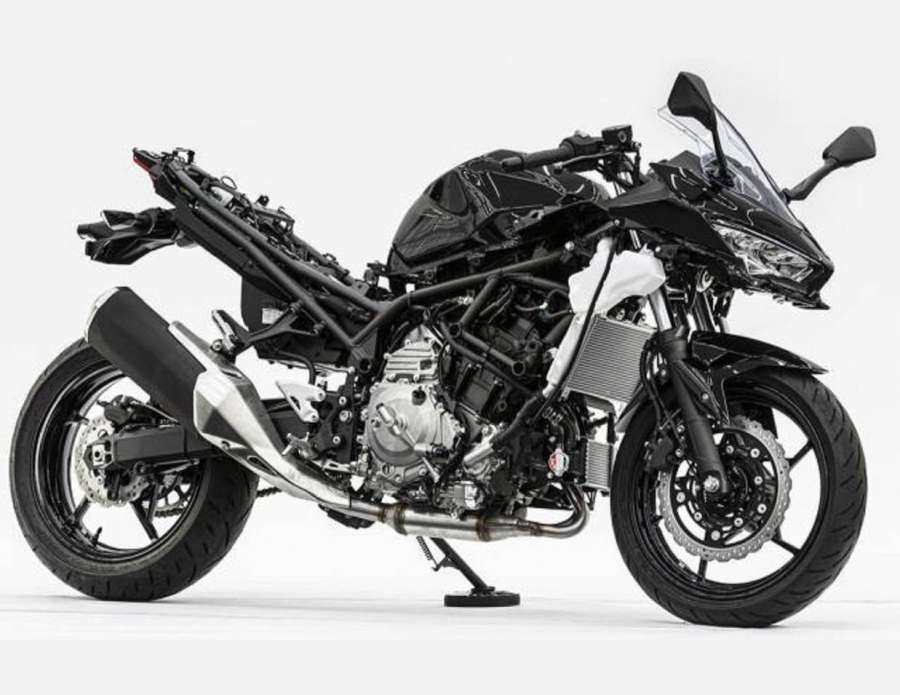
Kawasaki promises a hybrid production motorcycle for sale in 2024. Prototypes and patent drawings show a small, efficient electric motor placed directly over the transmission of existing Kawasaki engines. Kawasaki, of course, has extensive experience packaging superchargers into motorcycles, so it has an advantage in experience here.
So enthusiasts need not despair that electric motorcycles will be their only option, at least in the near future. Performance, good range and decent overall weight can be achieved with hybrid powertrains.
You can follow any responses to this entry through the RSS 2.0 feed. You can skip to the end and leave a response. Pinging is currently not allowed.


